Why You Need an AI Environment Architecture
88% of organizations use AI. Only 7% have scaled it, and only 5% are capturing real value from it. The gap isn't access to AI anymore. It's the operating environment around it.
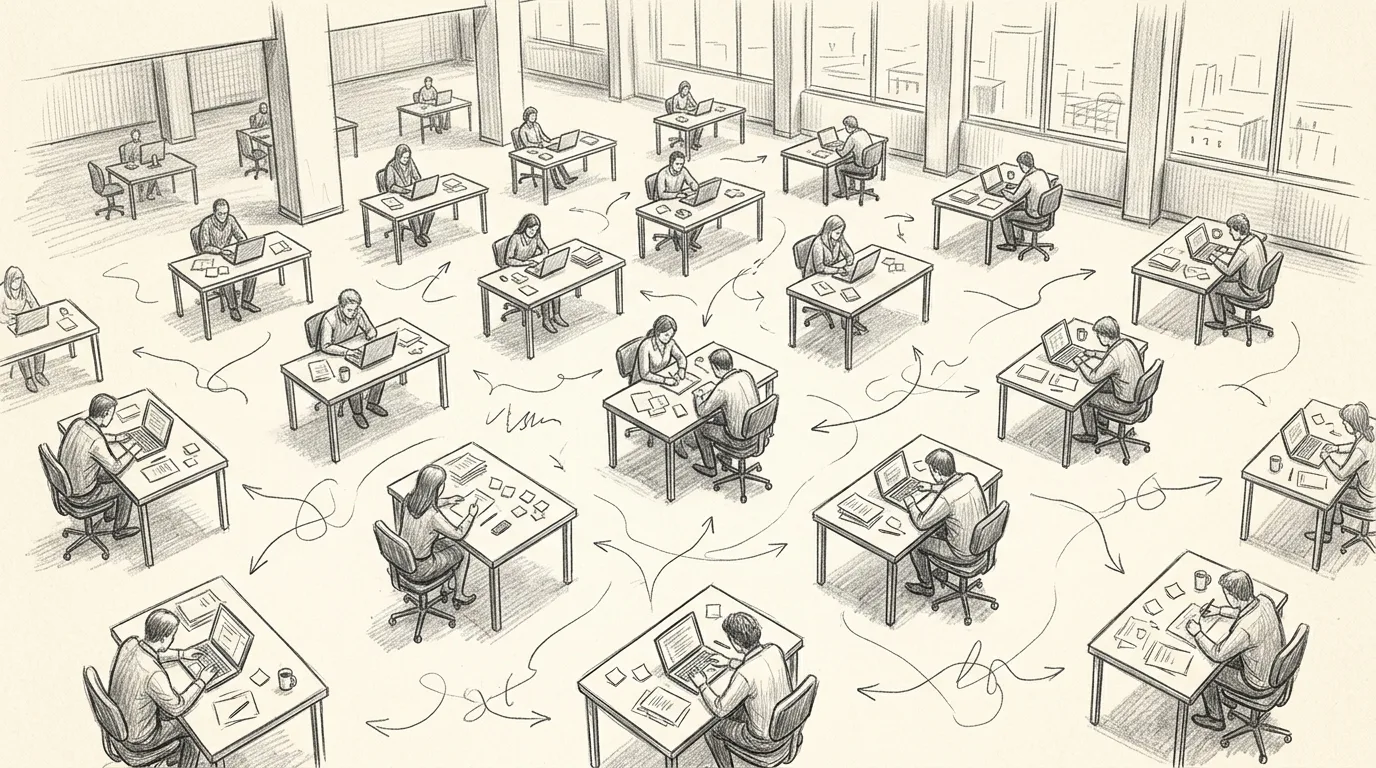
You have more AI than you did a year ago. Are you actually getting more from it?
That's the honest question underneath most AI spending right now. Adoption has stopped being the hard part.
The AI value gap is real, and it's measured
McKinsey's 2025 State of AI survey found that 88% of organizations now use AI in at least one business function, up from 78% the year before. Access isn't the bottleneck anymore.
But only 7% report AI fully scaled across the organization. Most are still stuck in what the survey calls pilot mode.
BCG's "Widening AI Value Gap" research, published in September 2025, found something similar from a different angle: only 5% of companies are what BCG calls "future-built," meaning they're actually capturing AI value at scale. 60% report little to no value from AI at all, despite real money spent on it.
It is the operating environment around it. Buying more tools doesn't close this gap. It just adds more individual, disconnected AI use on top of the same fragmented operation.
Which one are you?
Don't answer based on whether your team has ChatGPT, Claude, Copilot, or Gemini. Answer based on how the work actually happens.
| Current state | What it looks like |
|---|---|
| AI is individual | People use different tools, prompts, files, and habits. Good results depend on who is sitting at the keyboard. |
| AI is repeatable | Some workflows and standards exist, but context, knowledge, controls, and ownership are still fragmented. |
| AI is organizational | People work from shared context, connected knowledge, repeatable workflows, permissions, controls, and clear ownership. |
Most organizations, even ones with heavy AI adoption, are somewhere in the first two rows. That's what the McKinsey and BCG numbers above are actually measuring.
What you'd get back if the gap closed
If AI worked the way you actually wanted it to, here's what you'd get back, not more AI, but less friction around the AI you already have.
| Time | Hours lost searching, rewriting, re-explaining, and moving information between tools and people. |
| Control | Confidence that work follows the same standards, permissions, and process, no matter who's doing it. |
| Capacity | More useful work from the same team, without adding a layer of new complexity to manage. |
| Speed | Faster decisions and execution, because the context AI needs is already there instead of rebuilt every time. |
Which one of these matters enough that you'd actually change how the organization works to get it back?
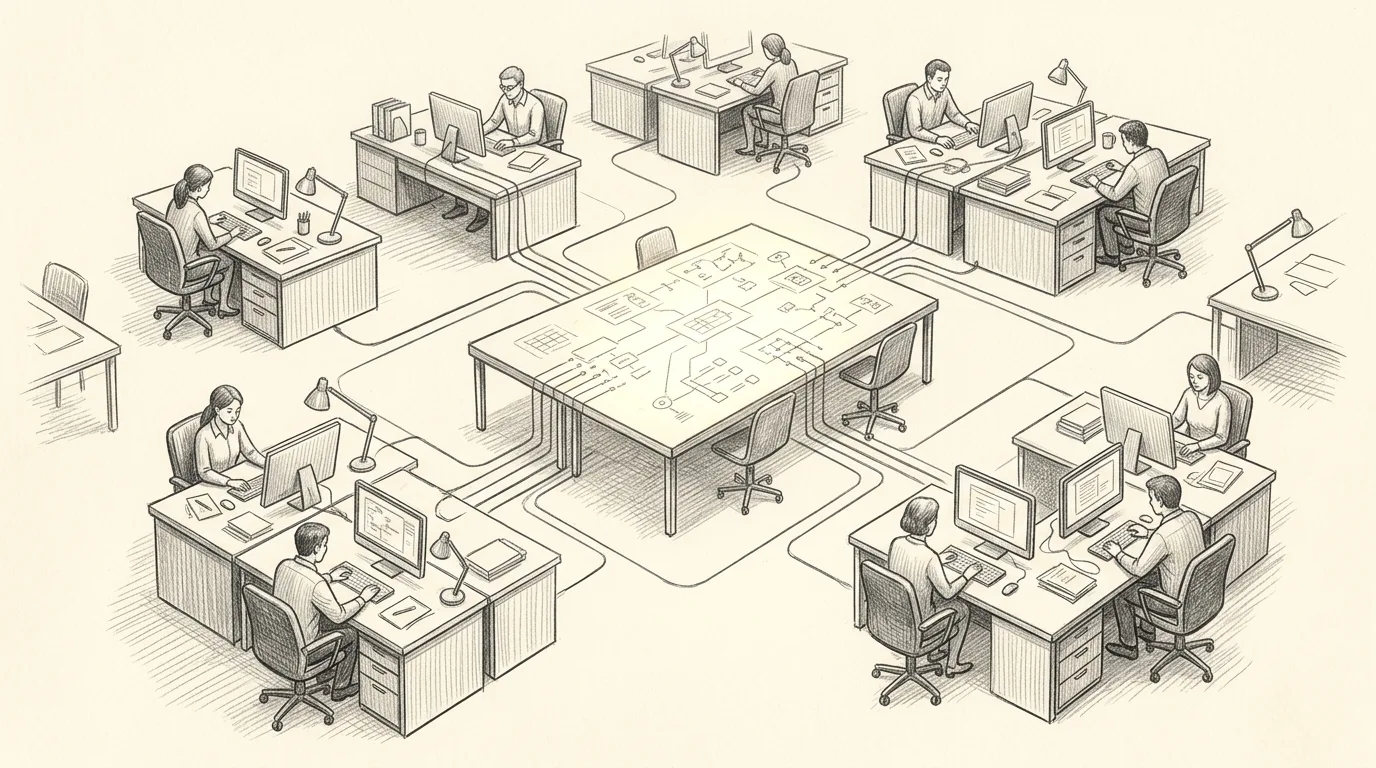
What the gap is actually costing you
Four questions tend to surface where the cost is hiding:
How often does someone have to rebuild context AI should already know? Where does work slow down because information lives in too many places? Which recurring tasks still depend on one person knowing the right prompt or process? What happens when AI produces the wrong answer, format, or action?
Those answers roll up into three real cost categories: time lost (people, multiplied by hours lost each week, multiplied by loaded hourly cost), rework and delay (repeated research, inconsistent output, corrections, approvals, handoff friction), and missed capacity (work your team can't take on because existing friction consumes the capacity they already have).
If the annual cost of leaving the gap open is larger than the cost of closing it, the decision stops being complicated. Most organizations have never actually run that math.
What we build instead of another tool
Most organizations don't need another AI tool. They need AI built around the organization they already have.
Revuity Systems is an operational systems company. We study how your organization actually works, then design and build the AI environment around your people, workflows, information, decisions, controls, and systems, platform-neutral, built for real work rather than a demo.
| Layer | What it covers |
|---|---|
| Context | How the business works: roles, standards, terminology |
| Knowledge | Files, policies, reference material, institutional knowledge |
| Workflows | Repeatable ways AI helps people do recurring work |
| Connections | Tools, data, APIs, MCP, integrations |
| Controls | Permissions, review, ownership, approvals, guardrails |
| Custom systems | Software or infrastructure, only when the environment truly needs it |
The underlying AI model can change. The environment stays built around your operation either way.
How we do it
We start with the work, not the software.
Simple enough to operate. Strong enough to matter. That's the standard for every layer of the environment, not just the first version of it.
What closing the gap costs
Getting started uses the same three doors as any AI Environment build, described in full in what an AI environment actually is and how we build one. The first two open straight to checkout; the done-for-you and managed tiers start with a scoping conversation instead, since those are shaped around your operation before a price is final.
Build it yourself, with our template and method.
Buy now →We build, validate, train, and hand it off.
Get started →Optional, only ever a separate decision after the environment is live.
Get started →The AI value gap isn't a tooling problem. 88% of organizations use AI, only 7% have it scaled, and only 5% are capturing real value from it, because the gap is the operating environment around the AI, not the AI itself. Closing it means building context, knowledge, workflows, connections, and controls around how your organization actually works, not adding another tool on top of the fragmentation that's already there.
Frequently asked questions
- What is an AI environment architecture?
- It's the operating layer built around how a business actually works: shared context, connected knowledge, repeatable workflows, permissions, controls, and integrations, all designed around a specific organization rather than bolted onto it. It's the difference between individual people using AI well and an organization capturing AI value at scale.
- Why isn't adding more AI tools closing the gap?
- Because the gap was never access. 88% of organizations already use AI in at least one function. Only 7% have it fully scaled, and only 5% are capturing real value from it, according to McKinsey and BCG's 2025 research. More tools without a shared environment just means more individual, disconnected AI use.
- How is this different from Revuity's AI Environments offer?
- It isn't different, it's the same thing described from the buyer's side. AI Environments is the productized way Revuity delivers an environment architecture, through Environment System, Environment Architecture, or Environment Implementation, depending on how much of the build you want to own yourself.
- How much does it cost to close the gap?
- Environment System is $500 (or $425 total over 12 months), Environment Architecture is $3,500 (or $2,850 total over 12 months), and Environment Implementation is $12,500 (or $10,500 total over 12 months). Ongoing management afterward is a separate, optional Managed Environment at $1,275 a month or $12,750 a year.
- How do I know what the current gap is actually costing my business?
- Multiply people affected by hours lost each week by loaded hourly cost, then add rework and delay, plus the work your team can't take on because existing friction consumes their available capacity. If that annual number is larger than the cost of closing the gap, the decision gets a lot simpler.