
AI Built Around Your Business: How Revuity Systems Works
By Revuity Systems ·
Revuity Systems is an operations systems company based in Los Angeles. We find the gap between how a business is supposed to run and how it actually runs, then build what closes it, often an AI operating environment shaped around the work. Here's what that means, and the three ways in.
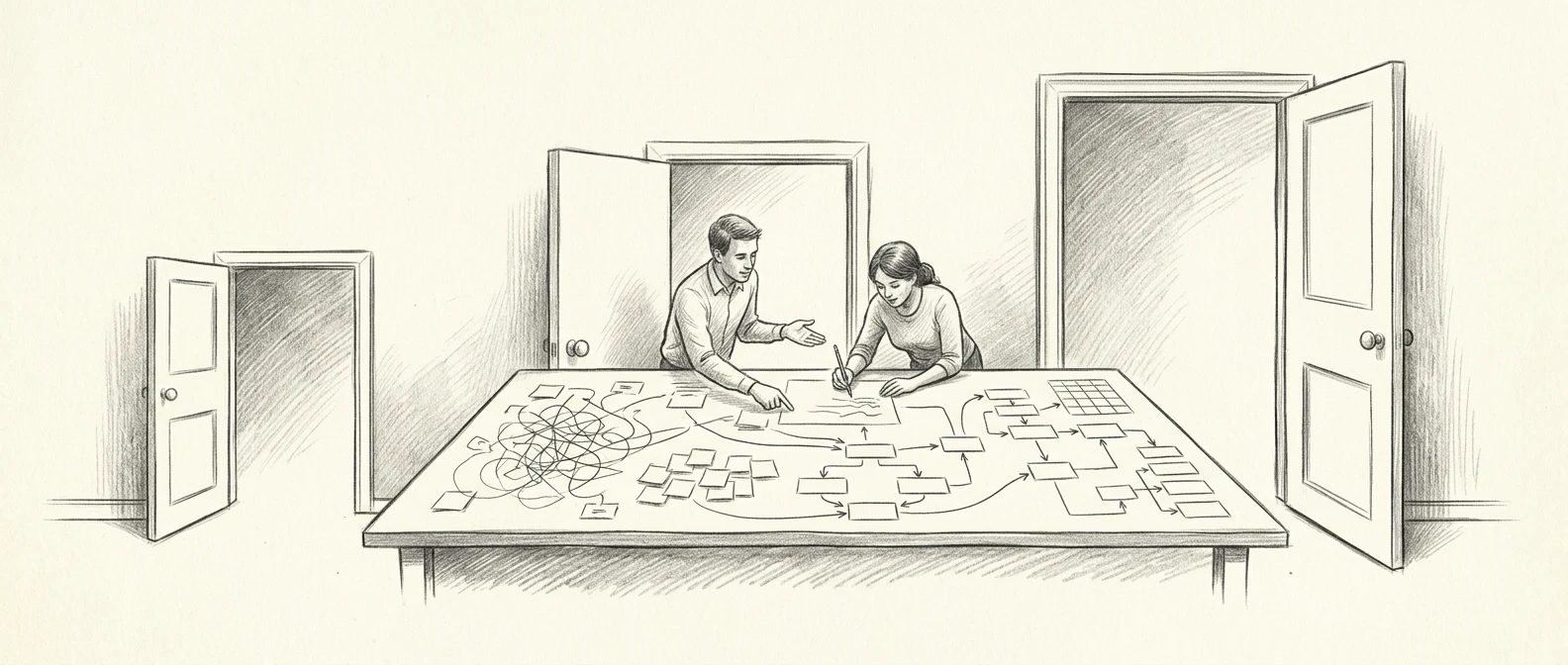
There's a particular kind of tiredness that has nothing to do with hours worked, and it comes from watching good people do good work inside a structure nobody ever designed, one that simply accumulated: a process here, a workaround there, a spreadsheet nobody remembers building, a decision that gets made three different ways depending on who's in the room.
Nothing is exactly broken, it just never quite adds up to what it should, and that's where most organizations live, in steady friction rather than crisis.
The odd thing is how easily this gets mistaken for a people problem or a discipline problem, something more effort would fix, when what's happening is much simpler and much less personal. The system is producing exactly the result it was built to produce, and nobody built it that way on purpose, it grew the way a garden grows when nobody ever decides what belongs in it. We think that's worth looking at directly instead of working around.
What we do
Revuity Systems studies how an organization actually operates, which is rarely how the org chart says it operates, and finds the gap between the two.
We follow the real flow of work: who decides what, where information gets stuck, what gets done twice, what gets forgotten, and what depends on one person's memory instead of a system anyone could run, and then we design what should exist instead and build it.
Sometimes that means restructuring a workflow. Sometimes it means a layer of AI that sits quietly around the work your people already do, watching, organizing, and bringing forward what matters, without asking anyone to change how they think or work. We call that an AI Operating Environment, and it's at the center of what we build, though the real aim is always the business running the way it was meant to.
Why we do it
Most of the friction people carry at work comes from structure, and structural problems deserve structural attention.
There's something a little unkind about telling a team to try harder when the system around them was never built to hold what it's now being asked to hold. We'd rather look underneath the symptom and find what's producing it, which is closer to the instinct of a good gardener or a good editor than a technology instinct, the instinct of anyone who has learned that most disorder is order nobody has found yet.

How we help
We meet a business where it actually is, which is often some distance from where its documentation says it is.
We map the real system, meaning the people, workflows, decisions, and information moving between them, and find the constraint that's actually shaping the outcome, and then we design and build what closes the gap, whether that's a starter system your team runs itself, a build we do together, or something we build, implement, and fully hand off, trained and running, so it's yours the moment we leave.
We stay platform-neutral throughout, so the problem picks the tool.
If you're comparing outside help for this kind of work, here's what good help actually delivers. And if the friction lives mostly inside your operations team, that's usually where automation pays back fastest.
There's a real relief in watching a system finally do what it was always supposed to do, with less friction and nothing extra to manage, and a business that moves the way it feels like it should.
Three ways in
Every system reaches a moment where it stops being an idea and becomes something that has to be built, and that's where plenty of companies quietly stall, often because nobody mentioned there was more than one way to go about it.
There's no single right depth for building an environment. There's the depth that matches where you are, how much you want your own hands in it, and how much you'd rather hand off and simply watch run, and so we built three ways in, three doors into the same room.
You can see all three side by side on the AI Operating Environments page.
Starter: $299
This door is for someone who mostly wants the map.
We hand you the system itself: the template, the architecture, and the thinking behind it, everything you need to build the environment with your own team, with nothing held back. If your people are capable and you have more time than budget, it's the honest choice, and we'll tell you so directly instead of steering you past it.
Simple version: Give me the system. I'll build it.
Teams: $499
This door is for a team that wants to start from the same rules.
Teams uses the same guided interview and generation as Starter, written for a team: role and responsibility guidance, shared workflow instructions, decision boundaries, and documented setup. It is self-service, with no calls or co-build, and it includes 12 months of email support.
Simple version: Give me the system, and answer my questions.
Custom: from $1,199
This door is for someone who already knows what they want and would like it to simply become real.
Revuity leads a bounded setup against an agreed written scope and acceptance checklist, designed for one operation. The final scope and price are confirmed in writing before you buy. Complex integrations, custom software, multi-department expansion, and ongoing operation are a separate quote.
Simple version: Build and implement it for me.
After you're through the door
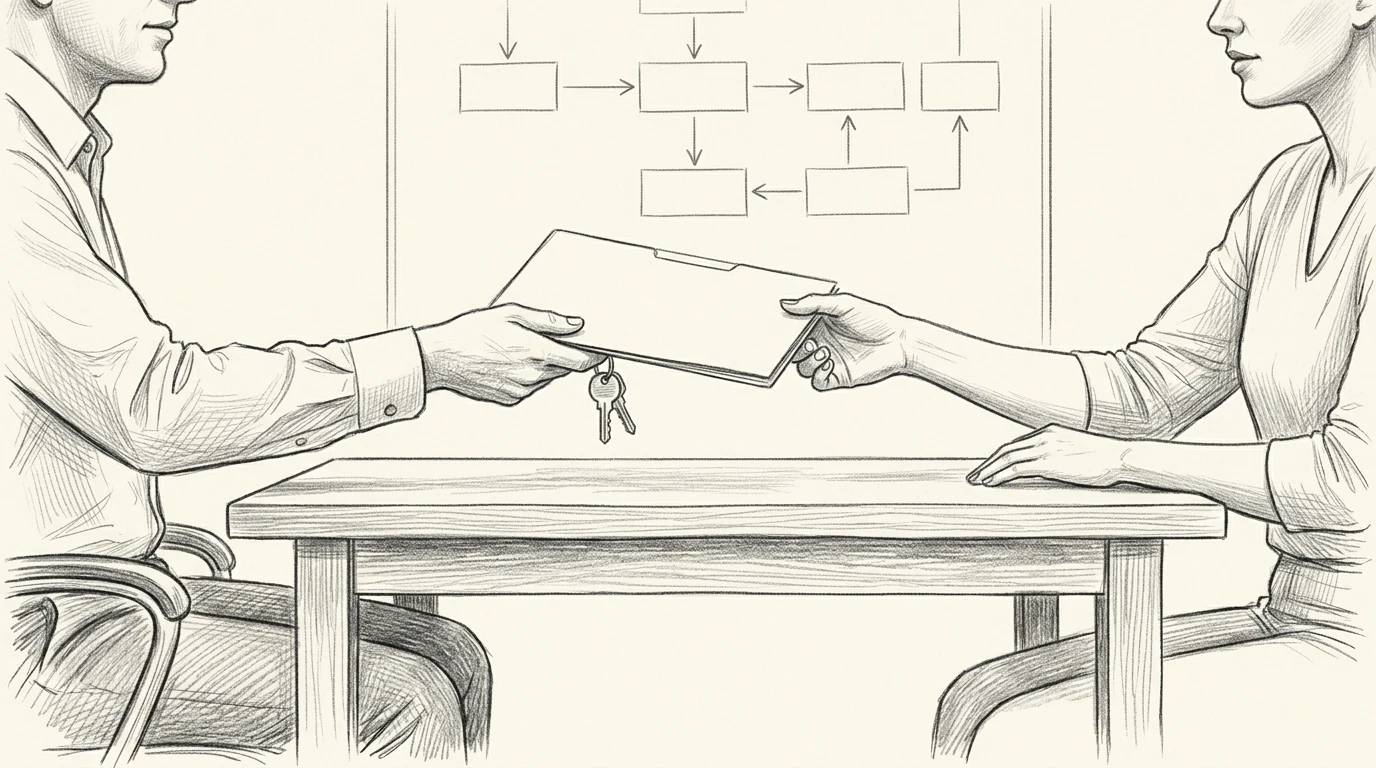
Teams and Custom include 12 months of email support, for questions and correction of defects. New features and changes are a new purchase, and neither tier includes monitoring or running the environment for you.
Each door is a complete way to arrive at the same place: a business running the way it was meant to, with technology working quietly underneath it instead of standing in front of it.
Revuity Systems is an operations systems company based in Los Angeles. We find the system underneath an operating problem, design what should exist instead, and build the environment that closes the gap, through whichever door matches how much of the build you want to own: Starter, Teams, or Custom.
Ready to choose a door? Start on the AI Operating Environments page to see current pricing and pick the one that fits.
Frequently asked questions
- What is an AI Operating Environment?
- An AI operating environment is the layer Revuity builds around the work your people already do, with workflows, decisions, and information organized and supported by AI, so nobody has to change how they think or work to use it, the surrounding system that helps the business run the way it was meant to, which makes it much more than a single tool or chatbot.
- What are the three ways to build an AI Operating Environment with Revuity Systems?
- Starter ($299) gives you the template and method to build it yourself. Teams ($499) is a standardized, self-service environment written for a team. Custom (from $1,199) is a bounded setup Revuity leads against an agreed written scope, for one operation. Each one is a complete way in.
- Is ongoing support included after the environment is built?
- Teams and Custom include 12 months of support from launch, by email only: answers to questions and correction of defects, with a reply within 2 business days. New features, changes, or new builds are a new purchase, and support does not include monitoring, operation, or managed service.
- Do I need to already know which AI platform to use?
- No. Revuity Systems is platform-neutral, and the environment may use Claude, ChatGPT, Gemini, or a combination, depending on what the business actually needs. The operating problem decides the tool.
- Where is Revuity Systems based?
- Revuity Systems is an operations systems company based in Los Angeles. We look at how a business actually operates and build what should exist instead, which sometimes includes AI and always starts with the work.
Set up your own operating environment.
Starter is $299, bought online, with no sales call.