
See the structure behind the results you keep getting.
A free, self-paced workbook that teaches you to trace a recurring problem back to the system producing it.
Works on your phone or computer. No account.
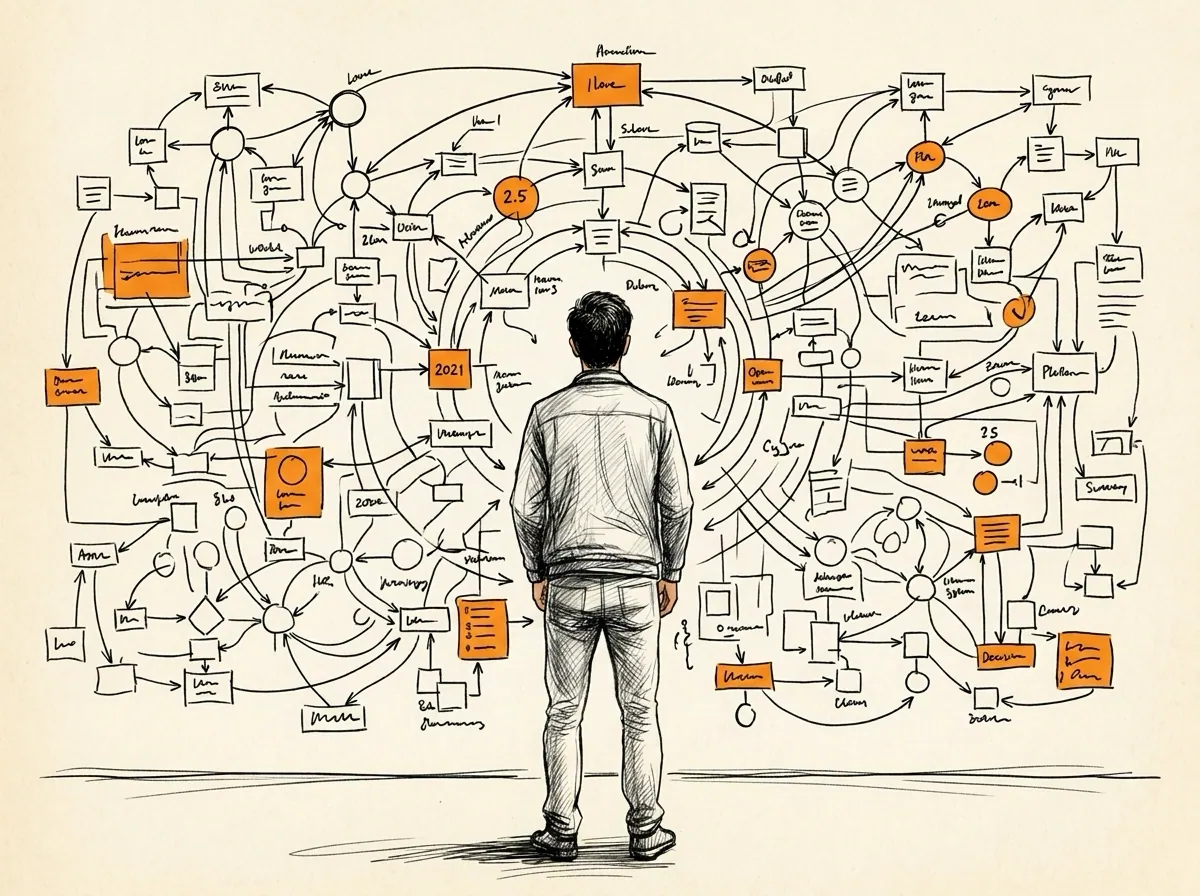
Results come from the system people work inside, not from the people.
Most of what goes wrong in an operation shows up first as an event. Systems thinking looks underneath it, at the pattern the event belongs to and the structure that keeps producing it.
What happened
The late shipment, the lost deal, the error someone caught on Friday afternoon.
What keeps happening
The same delay every quarter end, or the handoff that drops work every time the team gets busy.
What produces the pattern
The rules, incentives, information and delays that make that result the sensible outcome for everyone involved.
- 01
Input
What comes in: an order, a request, a number on a report.
- 02
Process
The work people do with it, and the time that takes.
- 03
Decision
The choice someone makes from what they can see.
- 04
Output
The result the customer or the next team receives.
Feedback. The output changes what comes in next, often after a delay, and that loop is where most recurring results come from.
A steadier way to think about the problems on your desk.
See past blame
When a result keeps repeating, you look for the structure producing it before anyone gets faulted, and the conversation gets calmer and more useful.
Trace second-order effects
You learn to ask what happens after the obvious effect, including who will change what they do in response.
Decide with the whole picture
You map the loops, the stocks and the delays first, so the change you pick is the one with the most leverage.
The same few problems turn up in most operations, and each one has a structure behind it.
Bottlenecks
Work piles up at one step, and pushing harder everywhere else only lengthens the queue. You'll practice finding the constraint and seeing why it moves.
Recurring problems
Last quarter's fix holds for a while and then the problem returns. You'll trace the loop that keeps bringing it back.
Handoffs
Work drops between teams when nobody owns the gap. You'll map where information and ownership change hands.
Decisions
Choices wait on information that arrives late or never arrives. You'll see how those delays shape what people decide.
Scaling
What worked with ten people strains with forty. You'll spot the balancing loops that push back as an operation grows.
Everything you need to practice, in one place.
12
Concepts
Short readings on feedback loops, stocks and flows, delays, polarity and the other building blocks.
7
Guided exercises
Each one applies an idea to a result from your own work, one prompt at a time.
1
Journal
Somewhere to write down what you notice during the week and tag it to the idea it shows.
10
Question knowledge check
See what stuck, with an explanation for every answer.
8
Step action plan
Turn what you found into one small test, an owner and a date to review it.
Three steps, on your own time.
- 01
Open it on any device
It runs in the browser on a phone, a tablet or a computer, and you can add it to your home screen like an app.
- 02
Work through it at your pace
Your answers save on your device as you go, so you can stop and pick up where you left off.
- 03
Keep what you wrote
Download your answers whenever you like. A printable PDF and readout is coming soon.
Before you start
Pick one result you keep getting, and trace it.
The workbook takes a few minutes to begin, and your answers stay on your device.