The system isn't broken. It's working exactly as designed.
Recurring operational friction isn't a broken step. It's a system optimized for the wrong outcome. Here's how to diagnose it before you fix it.
Every operator has had this conversation. A process that used to work stops working, and the assumption is always the same: something broke. A step got skipped, someone dropped the ball, a tool failed. Fix the step, retrain the person, replace the tool, and the problem should go away.
Most of the time it doesn't go away. It moves.
The team that missed a deadline hits the next one late too. The approval that took three days now takes five. The handoff that lost a customer's request finds a new place to lose the next one. If the fix were actually a fix, the friction would disappear. Instead it resurfaces somewhere else in the same shape.
That's the tell. A single broken step produces a single failure. A pattern that keeps reappearing in different clothing is not a broken step. It's a system, and the system is doing exactly what it was built to do.
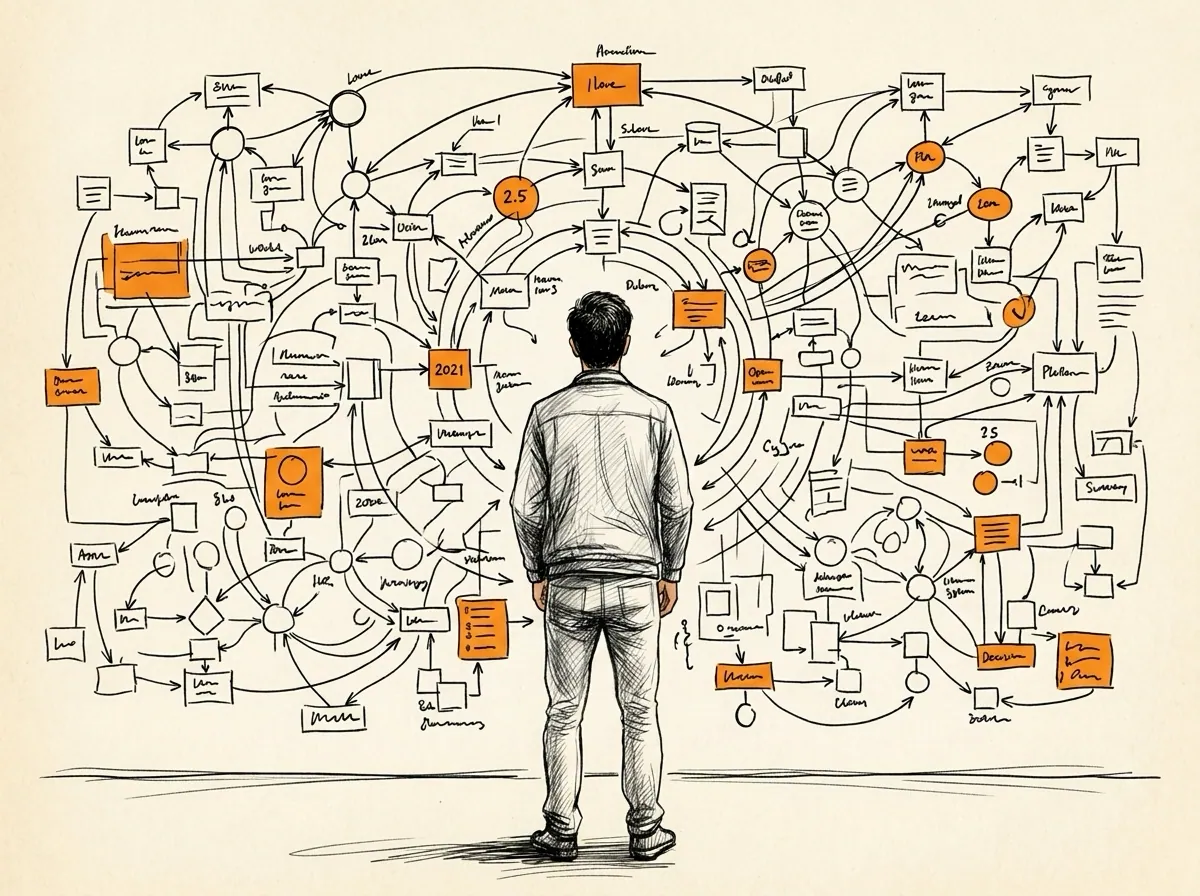
The system underneath the symptom
Every operation has a system running underneath it, whether anyone designed it on purpose or not. That system is made up of who owns which decision, what information moves and what doesn't, what gets measured, and what people are actually rewarded for versus what they're told matters. Nobody writes this down. It exists anyway, in the accumulated habits of how work actually gets done.
Systems are conservative. They protect whatever they're currently optimized for, even when that's not the outcome anyone wants on paper. A sales team optimized for closed deals will under-invest in onboarding, because onboarding doesn't show up in anyone's commission. A support team measured on ticket volume will close tickets fast rather than close them well, because speed is what gets counted. Neither team is malfunctioning. Both are performing exactly as their incentives, ownership, and information flow tell them to perform.
This is the distinction that gets missed constantly: intended outcome and actual outcome are not the same question. The intended outcome is what leadership wants. The actual outcome is what the system, as currently built, is structured to produce. When those two diverge, no amount of urging people to try harder closes the gap, because the people aren't the constraint. The structure is.
Why the fix that doesn't fix anything keeps getting tried
The reason companies keep patching symptoms instead of touching the system is that patches are fast and systems are inconvenient to look at directly. Retraining a person is a single conversation. Replacing a tool is a purchase order. Redesigning who owns a decision, what data moves between two teams, or what gets rewarded at review time means touching org design, incentives, and habit, all at once. It's slower, it's more uncomfortable, and it requires someone to say out loud that the current structure is producing the current result on purpose, even if unintentionally.
So the patch goes in. The symptom recedes for a quarter. And then it comes back, usually in a slightly different location, because the underlying constraint that produced it never moved.
This is the operational cost that doesn't show up on a single line item but shows up everywhere: capacity spent solving the same problem repeatedly instead of once, decisions made without the information that would have made them faster, and teams that quietly build workarounds because the official path doesn't hold up. Workarounds are the most honest data a company has about where its systems have stopped matching its actual work. Nobody builds a workaround for a step that's functioning.
Diagnosing before designing
The useful question isn't "what broke." It's "what is this system currently optimized to produce, and is that the outcome we actually want." Answering that requires tracing the result back through ownership, information, and incentive rather than stopping at the first visible failure point. It usually surfaces something uncomfortable: the system is not malfunctioning. It's succeeding at the wrong thing, because that's what it was structured to succeed at.
Once that's visible, the intervention looks different than a patch. Sometimes it's a change in who owns a decision, so the person closest to the information is the one making the call instead of routing it three layers up for a signature. Sometimes it's a change in what data moves between two teams that currently operate off separate, disconnected pictures of the same customer. Sometimes the intervention includes new workflow, new tooling, or automation, but only after the actual constraint is identified. Technology deployed against the wrong constraint just makes the wrong thing happen faster.
The order matters more than the tool. Understand how the work actually happens before touching anything. Diagnose the system producing the current result before designing what should replace it. Build the intervention the diagnosis calls for, not the one that was already on hand.
What changes when the system changes
Companies that go through this the right way don't describe the result as automating something or implementing a tool. They describe it as friction disappearing from a place they'd stopped noticing, because they'd built entire workarounds around it. Decisions that used to take a week start taking a day, not because anyone works faster, but because the decision moved to the person who already had the information. Handoffs that used to lose requests stop losing them, because ownership of the handoff is now clear instead of assumed.
None of that comes from fixing a step. It comes from identifying what the system was actually optimized to produce, and building something that's optimized to produce what the business needs instead.
The next time something in your operation looks broken, it's worth asking the harder question before reaching for the obvious fix: is this actually malfunctioning, or is it working exactly as it was built to work, and the build is the problem.