
See what keeps one part of your life running rough.
Most of us run on routines nobody ever designed: how commitments get tracked, how the week gets planned, how household and admin tasks get done. When one of them keeps going wrong, the Personal Systems Diagnostic helps you look at how it actually works and choose one change to test.
AI-assisted. Self-service. About how you run your own routines, not about you. Not open to buy yet.
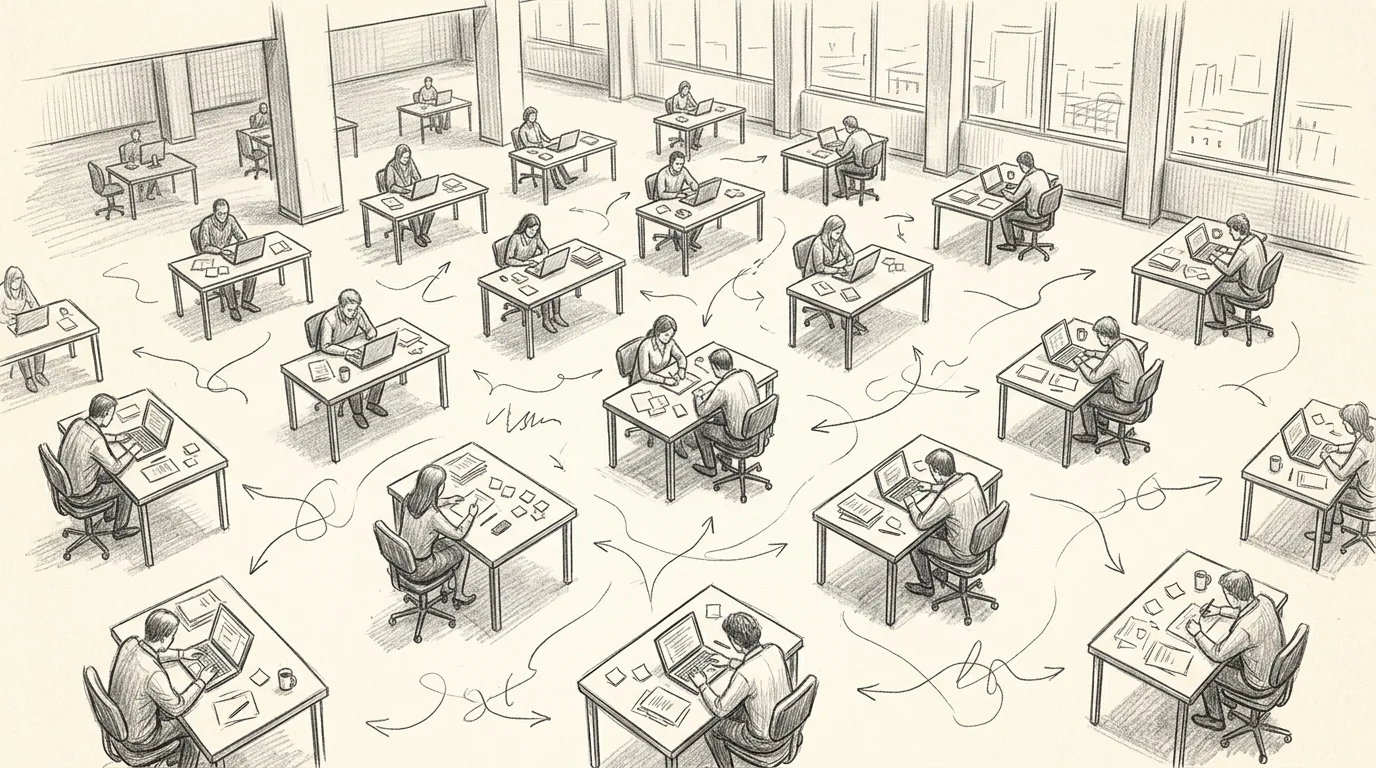
The thing that keeps going wrong is usually a system, not a lack of effort.
A bill gets paid late again, so you set another reminder. The week falls apart on Wednesday, so you buy a new planner. A request sits in your inbox for days, so you promise yourself to check it more often.
Sometimes that works. Often the real cause is somewhere else: a handoff nobody owns, a priority that was never decided, or information that lives in four places.
Before adding another tool or another rule, look at how it runs today.
Four steps from a recurring snag to one thing to try.
Pick one problem
Choose one routine or recurring problem that you control yourself, such as a weekly plan, a stack of household admin, or a decision you keep putting off.
Describe how it runs
Answer guided questions about the steps, the commitments, where your information lives, who else is involved, and what you have already tried.
Receive your report
A written report shows how the routine appears to work, where the friction and handoffs are, and which answers each point rests on. Where your answers do not support a conclusion, it says so.
Choose one experiment
The report ends with a single 30-day experiment, with a measure and a point at which to stop. You decide whether to run it.
How the routine actually moves.
The Personal Systems Diagnostic treats one part of your life the way an operations review treats a process: the steps, the handoffs, the information, and the decisions.
The report separates what you told us, what can reasonably be inferred from it, and what is only a hypothesis that needs more evidence.
Workflows
The steps a routine goes through, from start to finish.
Commitments and priorities
What you have said yes to, and what gets decided by default.
Household and admin tasks
The recurring jobs that pile up when no one owns them.
Information
Where notes, tasks and documents live, and where they get lost.
Handoffs
Where a task depends on another person or another system.
Decision routines
How and when you decide, and what causes a decision to wait.
For people who want to run something better.
People with a recurring snag
One routine keeps breaking, and you want to understand why before you change it.
People with a full plate
Several commitments compete, and the way they get prioritized has never been made explicit.
People who manage a household
Shared tasks, paperwork and appointments move between several people and several places.
People who work for themselves
Your personal admin and your work admin overlap, and neither has a clear system.
A look at your routines, stated plainly.
The Personal Systems Diagnostic is not therapy, and it is not a medical, psychological, legal or financial-investment assessment. It does not diagnose any condition and it does not give advice on those subjects.
Please leave out health details and sensitive financial details when you answer. Keep to how the routine works: the steps, the tools and the handoffs.
Its findings depend on what you tell it. Where the answers do not support a conclusion, the report names the uncertainty instead of guessing.
A written report on one routine, with one thing to test.
A picture of the steps, people, tools and decisions in the routine you chose.
Where the routine slows down or drops something, and which of your answers each point comes from.
A short list of changes to the structure of the routine, before adding another tool or another rule.
A single change to try, with a measure to watch and a point at which to stop.
A short overview you can keep, print or share with the people the routine involves.
The same way we look at a business, applied to a personal routine.
Revuity Systems is an Operations Systems company. We start by examining how work actually happens: how information, responsibilities and decisions move, before recommending any new tool.
Understand the system.Find the friction.Test one change.
Start with one routine that keeps going wrong.
Describe how it runs, see where it snags, and decide what single change to test next.