
Find what's slowing your business down.
Your business has processes, people, tools, and information moving through it every day. When something isn't working, the cause isn't always where the problem appears. The Business Systems Diagnostic helps you examine how your operation actually works, identify possible constraints, and see where a focused change could make the greatest difference.
AI-assisted. Self-service. Built on data science, operations, and systems thinking. Not open to buy yet.
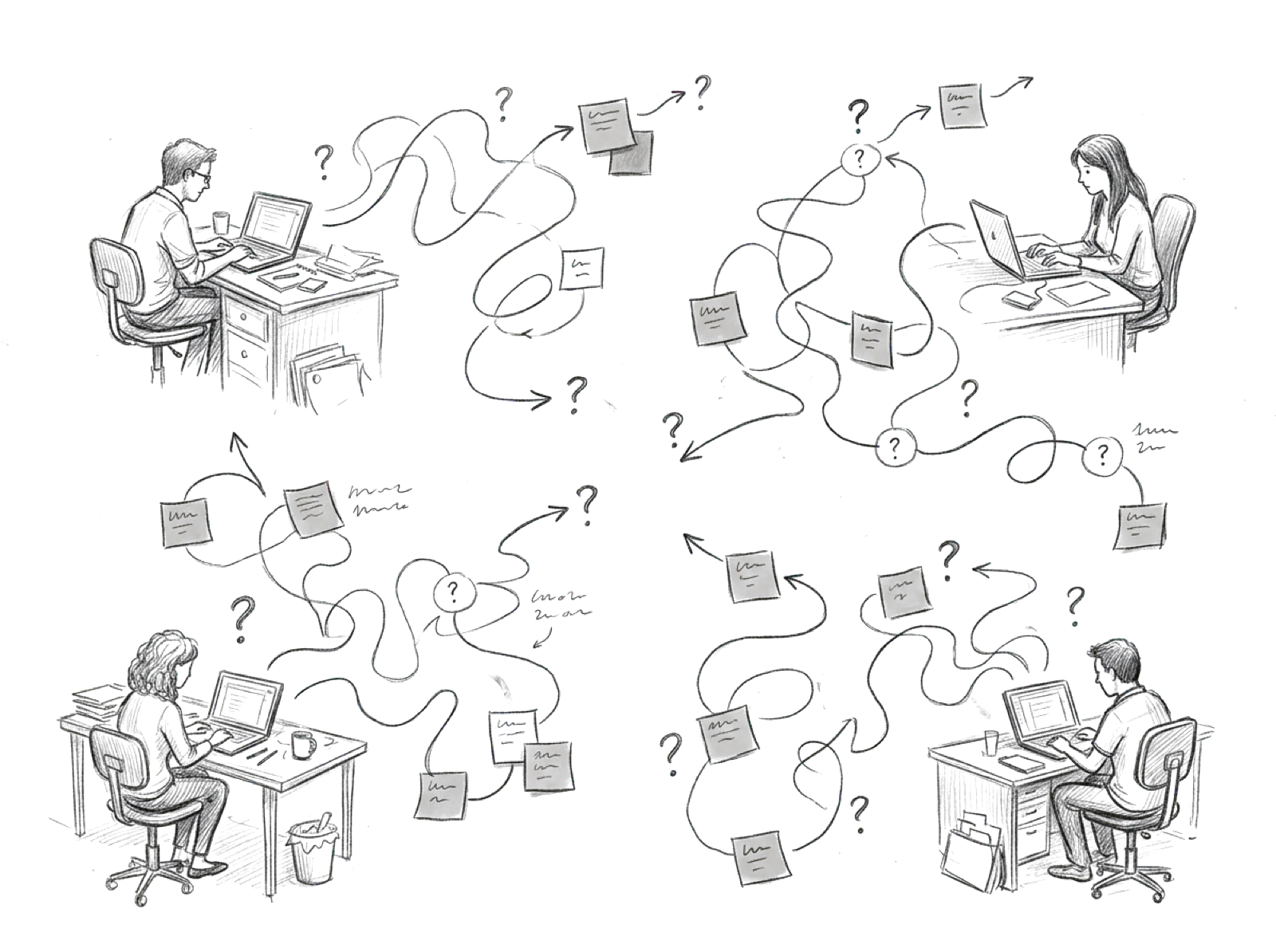
The problem you see isn't always the problem you need to solve.
A team misses deadlines, so management adds another tracking tool. Customer response times increase, so the business adds more meetings. An owner becomes overwhelmed, so they hire another employee.
Sometimes those decisions help. Other times, they add expense without changing the underlying problem.
What looks like a productivity problem may be a handoff problem. What looks like a staffing shortage may be a decision bottleneck. What looks like a technology problem may be a process nobody has clearly defined.
Before changing the operation, understand the system.
Five steps to a clearer operating picture.
Describe the problem
Tell the system what isn't working. Identify the affected operation, recurring symptoms, and the outcome you're trying to achieve.
Map the operation
Answer guided questions about the people, processes, information, tools, responsibilities, and decisions involved.
Examine the constraints
The diagnostic evaluates patterns in the information you provide and identifies possible bottlenecks, handoff failures, delays, and feedback loops.
Receive your diagnostic
Get a structured report showing how the operation appears to function, where the likely constraints are, and what evidence supports each hypothesis.
Decide what to change
Review prioritized interventions and a proposed 30-day improvement experiment. You remain responsible for choosing and authorizing changes.

See how the work moves.
The Business Systems Diagnostic uses a guided interview and a structured analytical framework to help you examine one operating problem.
The result is a structured diagnosis that distinguishes reported facts, possible causes, and questions that need further evidence.
Workflows
How activities move from beginning to completion.
People and responsibilities
Who owns the work and where coordination is required.
Information
What people need to know, where it comes from, and where it gets lost.
Decisions
What needs approval, what causes waiting, and where authority is unclear.
Constraints
What may be limiting the performance of the larger operation.
Feedback and delays
How recurring problems reinforce themselves over time.
For businesses that know something needs to change.
Business owners
Understand why too many decisions and exceptions keep returning to you.
Operations managers
Identify potential workflow constraints and recurring coordination problems.
Small teams
Examine confusing responsibilities, duplicated work, and difficult handoffs.
Growing organizations
Determine whether current operating methods can support additional volume.
Nonprofits and professional services
Review reporting cycles, administrative procedures, approvals, and recurring coordination challenges.
An analytical product, stated plainly.
The Business Systems Diagnostic is an analytical product. It does not automatically verify every finding against your live business data, implement organizational changes, integrate software, or continuously monitor performance.
Its findings depend on the accuracy and completeness of the information you provide.
Where evidence is insufficient, the report identifies the uncertainty rather than stating an unsupported conclusion.
A practical operating diagnosis, not just another AI response.
A visual representation of the people, activities, information, and decisions involved in the selected operation.
A ranked set of possible operating constraints, with the evidence and assumptions behind each.
An explanation of recurring patterns and how problems may reinforce one another.
Focused changes intended to improve the structure of the operation before adding unnecessary complexity.
A proposed sequence of actions, owners, checkpoints, and measures for testing an improvement.
A consolidated report you can use for management discussion, operating reviews, or further systems design.
Built on data science, operations, and systems thinking.
Revuity Systems is an Operations Systems company. We help you operate more effectively. Our approach starts by examining how work actually happens: the movement of information, responsibilities, decisions, and recurring activities, before recommending technology or additional resources.
Understand the system.Find the constraint.Change what matters.

Stop treating symptoms without examining the system.
Start with one operating problem. Understand how the work moves. Identify what may be holding it back, and get a practical plan for deciding what to improve next.