
The problem is rarely where the symptom appears.
Before fixing the task you can see, we look at the system around it.
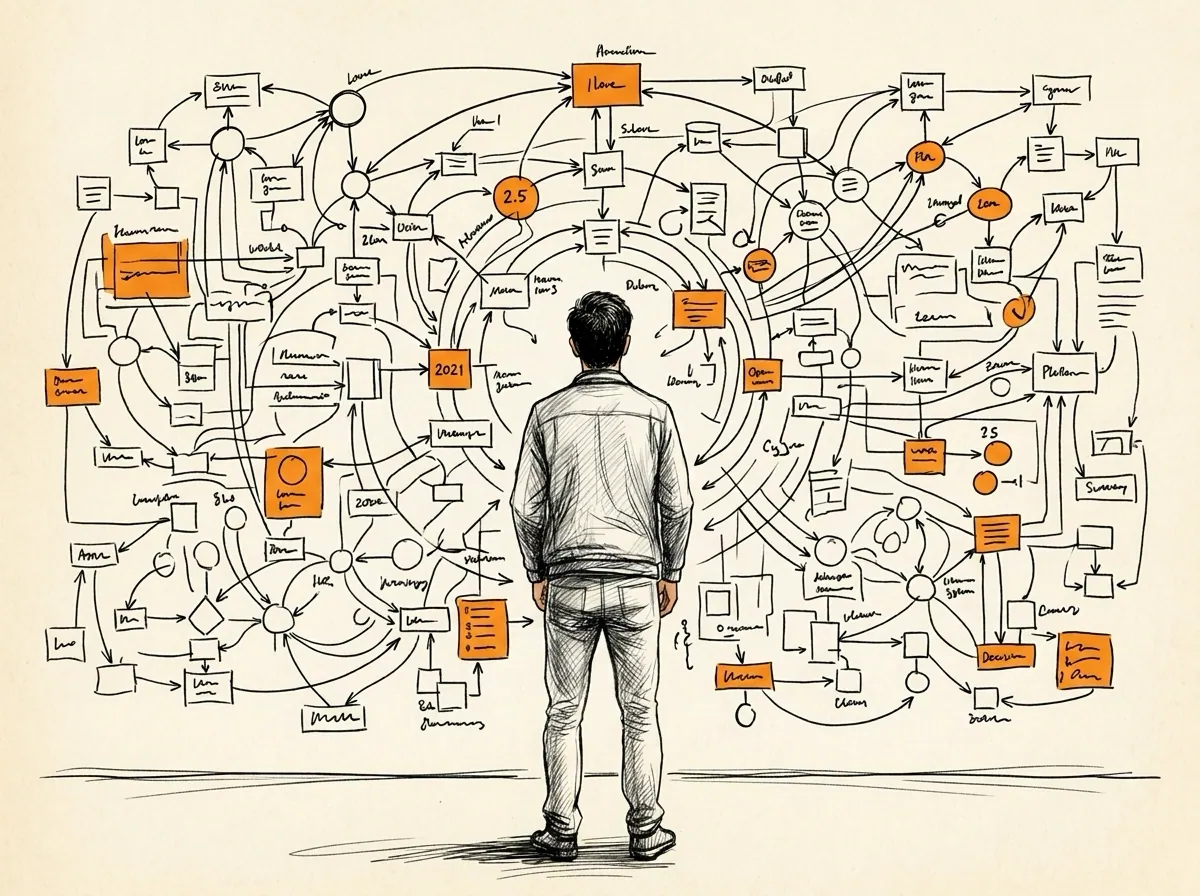
Before fixing the task you can see, look at the system around it.
It's a clue, and often not the problem itself.
Change the part that changes the whole system.
How we make an operation visible.
Flow
Where work, information, and decisions actually move, including the handoffs and waits that rarely appear in an org chart.
Constraints
The few bottlenecks that set the pace for the whole operation, even when they look like a small local inconvenience.
Feedback
The signals that tell people whether the system is working, arriving in time to make a better decision.
Decision rights
Who can act, what they need to know, and where accountability becomes vague, duplicated, or stuck.
Operational debt
The hidden cost of manual workarounds, scattered tools, undocumented exceptions, and systems that no longer match the work.
Better interventions, fewer expensive detours.
Teams buy tools around the problem.
Usually the result is another workaround, another dashboard, or another task for the people already carrying most of the load.
Teams change the system that creates the problem.
- Clearer flows and fewer handoffs
- Decision-makers get the information they need sooner
- Automation is applied to a defined job, with controls
- The system has an owner and a way to improve over time
See the system before you fund the fix.
Starter is $299, bought online, with no sales call.