Cookies
We use one analytics cookie (Google Analytics) to understand which pages are useful. No ads, no reselling, and declining changes nothing about how the site works. Privacy Policy
Software built for people and AI.
From an idea worth building to a product people can actually use, whether they click through it or ask an AI to work through it for them.
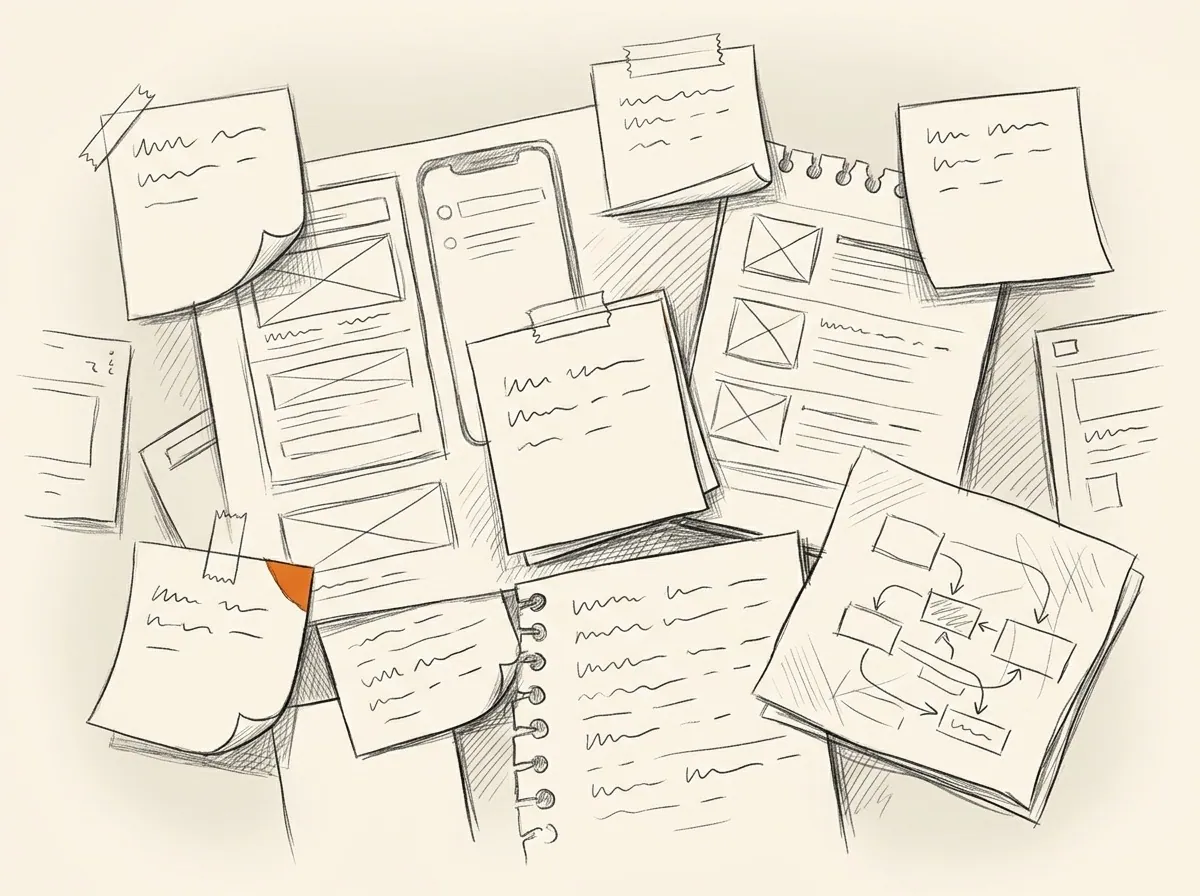
You know what you want to create. Getting it built is the hard part.
It might be an app, a SaaS product, a website, an internal tool, or something for a business you already run. The idea makes sense in your head. Turning it into a working product means making hundreds of decisions about workflows, data, screens, infrastructure, and what actually has to exist in version one.
That creates a familiar middle ground: the idea is real enough to pursue and not yet clear enough to build.
The interface is separating from the operating system.
For about twenty years, software bundled everything together. The screen, the database, the workflow, and the rules arrived as one application, so using the product and running the business through it were the same act. AI is pulling those pieces apart. A person may still click through your product, and an AI agent may reach the same information and stage the same approved action through an API or MCP connection. The value sits in three layers, whichever way it is reached.
The structured, contextual information everything else depends on.
What CollabX builds: Clean data models, permissions, and APIs that people and agents can both read correctly.
The workflows, rules, and compliance logic that make execution dependable.
What CollabX builds: The business logic, approvals, and audit trails, with a usable interface on top.
The AI systems that query data, run commands, and complete tasks.
What CollabX builds: Approved tools and MCP access, so an agent can act inside the rules.
Governance runs through all three. An agent should know who is asking, what that person may see, which actions are permitted, what needs approval, and what happened before, so we design those answers into the product from the start.
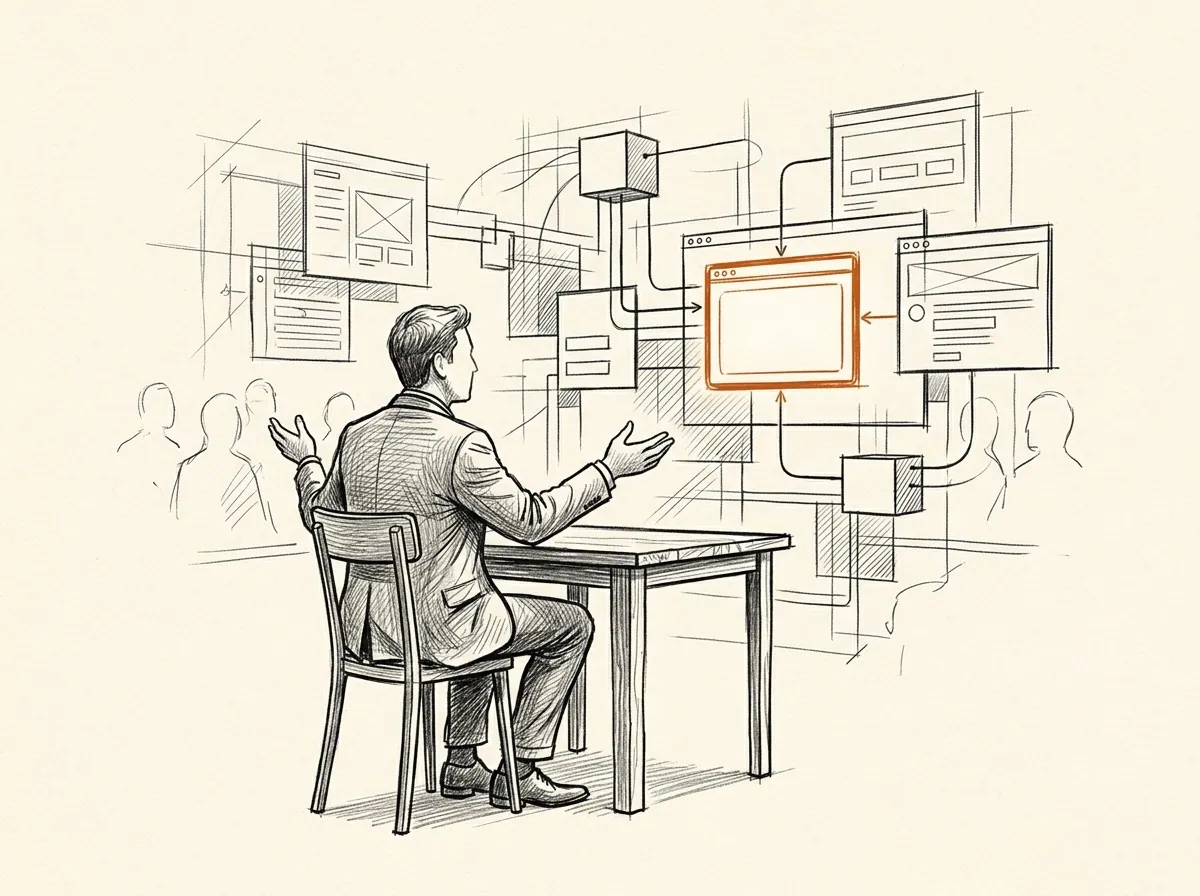
Turn the idea into something buildable.
We start by understanding what the product is supposed to do: who it's for, what problem it solves, what someone needs to be able to get done, what absolutely has to work in the first version, and what can wait.
A long feature list can wait. We look for the smallest product that proves the idea.
Design the system behind the product.
Once the core experience is clear, we design what needs to exist behind it.
User experience
What people need to see and do.
Workflows
How actions move through the product.
Data
What information the product needs to remember and manage.
Infrastructure
What services, APIs, authentication, payments, or backend systems are actually required.
Agent access
What information and approved actions an AI system should be able to reach, and under which permissions.
Every CollabX system considers the person using it and the intelligent system that may act on that person's behalf.
A person can understand it, trust it, and get their work done.
Important information and capabilities live somewhere an agent can reach, beyond the visual screen.
Data carries enough structure for software and AI to read it correctly.
Approved operations are exposed through APIs, tools, or MCP, so nobody has to repeat them by hand.
Identity, roles, permissions, approvals, and audit trails come before autonomy.
Where practical, the system works across several intelligent environments and never depends on one provider.
The interface is no longer the whole product, though it still matters a great deal. People will keep using applications, and a good interface will keep earning its place. What changes is that the screen stops being the only way software gets used.
Losing the screen does not mean losing the value.
When a request arrives through an agent, the screen is skipped, but the data and the rules still do the work. A product with clean data and workflows that enforce the business's rules stays valuable whichever way it is reached, and as agents take on more of the work, that dependable structure matters more.
Your business logic should belong to you.
People are already teaching AI assistants how their business works, and that accumulated context becomes hard to replace. We build so the rules, definitions, and workflows live in your application layer, written down and portable, and a change of model or vendor leaves them in place.
Build the product the idea needs today.
We use modern development and agentic engineering to move quickly from the architecture to a working product. Along the way that might mean screens, databases, sign-in, APIs, integrations, payments, automation, or AI.
The rule stays the same throughout: build what the product needs now, and leave what it might someday become for later. AI, integrations, and new distribution channels come in when they serve the product, and we learn from how people use it.
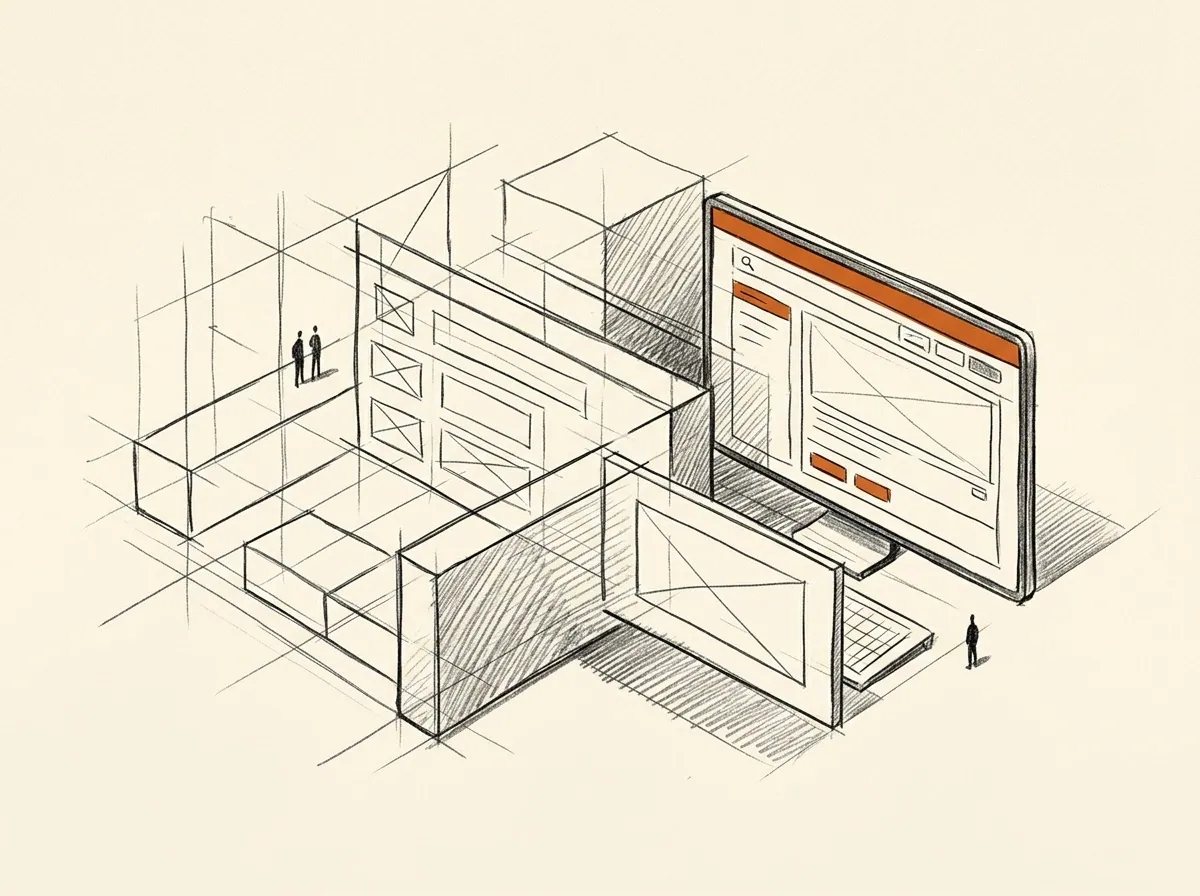
Decide what relationship makes sense.
Every product needs a slightly different relationship with us. Sometimes you need someone to build the first version and hand it over. Sometimes you'd like us to take it all the way to launch. And once in a while, the opportunity makes more sense as a partnership.
The product will change as you learn. The relationship should fit the opportunity.
The idea becomes something real.

The product gets a clear first version.

Unnecessary features get cut.

The architecture supports what actually needs to work.

You get a working product you can put in front of people.

The next decision comes from real users trying it.
Your data and your rules stay yours, whichever interface or model comes next.
The product decides the technology.
CollabX works across many kinds of digital product.
Start with the smallest product that proves the opportunity.
The workflows, user experience, information, and system boundaries the product needs.
The screens and interactions people actually use.
Databases, Supabase, APIs, business logic, and infrastructure where required.
Deciding what data the product owns, what it should buy or connect, and how it is structured so agents can use it.
Accounts, permissions, subscriptions, checkout, or payments when the product needs them.
Connections to the systems or services required for the product to work.
Models, agents, MCP, knowledge, or automation when AI materially improves the product.
Roles, approvals, and audit trails for anything an AI system is allowed to do.
From idea to working product.
Choose how far you'd like us to carry the product.
CollabX MVP Build
Fixed price · First functional version
We build the first working version of your product, with the core experience, a clean data model and basic API, the essential workflows, and a simple deployment, then hand it to you.
- Core product experience
- Clean data model and basic API
- Essential workflows
- Minimal deployment
- Handoff
CollabX Product Launch
Fixed price · Launch-ready
We take the product past a first version and get it ready to launch: a production-ready core, deployment, the integrations it needs, agent-ready access where the product needs it, sign-in, payments where they make sense, testing, and launch preparation.
- Production-ready core product
- Deployment
- Essential integrations
- Agent-ready access (APIs or MCP) where the product needs it
- Auth, and payments where relevant
- QA and launch preparation
- Handoff
CollabX Partner Build
Non-refundable partnership fee · Equity negotiated deal by deal
We become your product and engineering partner. We build the first version and stay involved afterward, under a separate written agreement that covers equity, the initial scope, ownership, our continuing role, decision rights, and exit terms. The $750 fee is non-refundable.
- Revuity builds the MVP
- Ongoing product and engineering partnership
- Written agreement covering equity, scope, ownership, and exit terms
We're selective about which products we partner on.
In a CollabX partnership, Revuity takes on part of the product risk instead of simply charging for the work, so we look for:
- a real operating or market problem
- a founder we want to work with
- a product we believe should exist
- a clear contribution Revuity can make
- aligned expectations about ownership and decision-making
If a partnership isn't the right fit, the MVP Build and Product Launch paths are still simple and open.
A product or system needs to exist.
CollabX fits when you have a product or system that needs to exist, and a prettier website would not solve it. You may be launching a software product, replacing a spreadsheet-heavy workflow, building an internal operating system, creating a client or member portal, or making an existing system usable by agents. You may also be a team whose people increasingly work through AI assistants and need the underlying systems to hold up when they do. If the right answer turns out to be a simple website, we will tell you so.
From idea to something people can try.
A founder has been describing a software idea for months, and they know who it's for and what problem it should solve, but the feature list keeps growing and nothing has reached users.
CollabX would reduce the idea to the smallest product that proves the core workflow, build it, deploy it, and get it into the founder's hands, so the next decision comes from evidence instead of imagination.

Build for how software is being used next.
People will keep using applications, and AI systems will increasingly work through them. The interface may change and the models will keep improving, so the data, the rules, and the governed access underneath are what we build to last.
Questions? Talk to our solutions team.