Cookies
We use one analytics cookie (Google Analytics) to understand which pages are useful. No ads, no reselling, and declining changes nothing about how the site works. Privacy Policy
The Function Diagnostic
Before we build, we find where the work is breaking down.
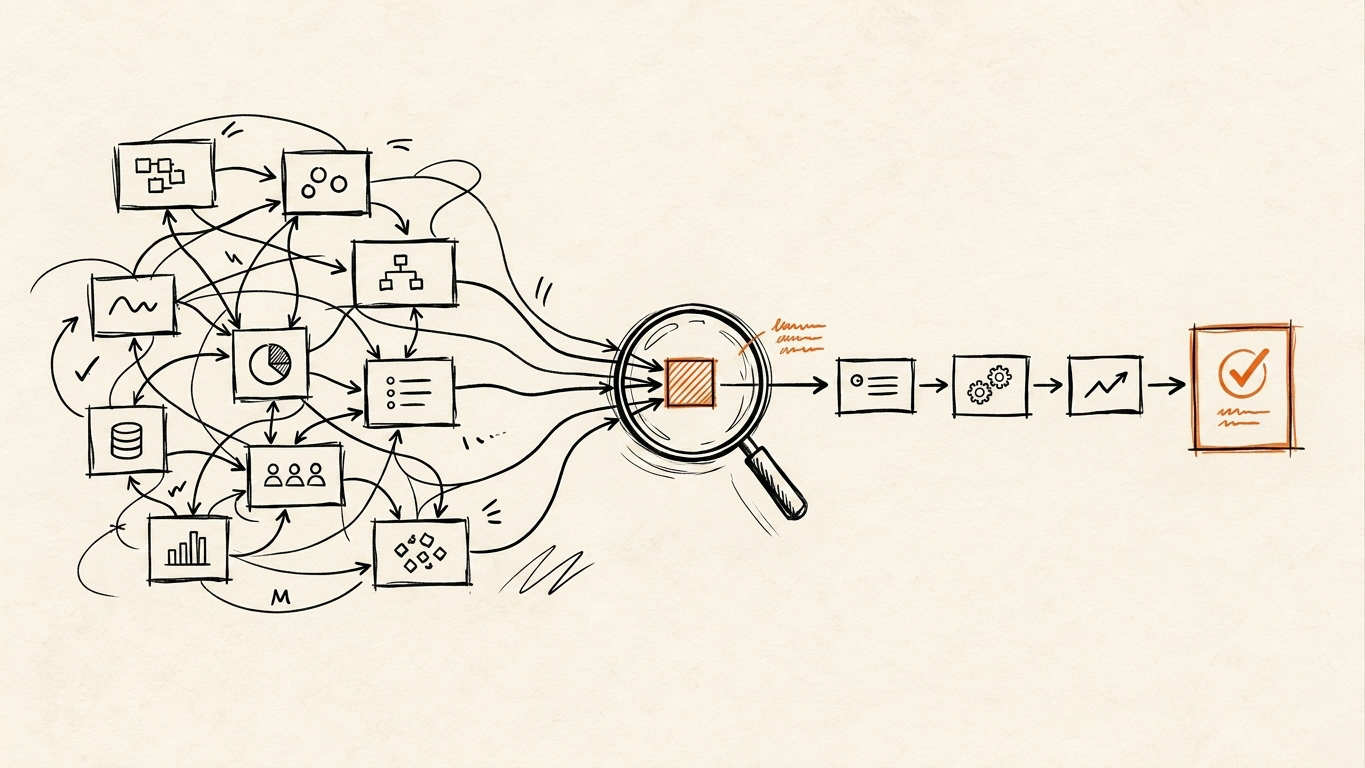
We trace the workflow, handoffs, data, decisions, and exceptions behind the problem so the next step solves the right thing.
At a glance
A real engagement, not a sales call.
What happens
Four steps from friction to a plan.
What you receive
Enough evidence to make the next decision with confidence.
The work product
You keep it.
The diagnostic is not a teaser for a proposal. It is the actual planning work: a shared view of the problem, the proposed intervention, and what success must look like.
- A map of the current workflow, including manual handoffs, systems, and exceptions
- The bottlenecks, wasted capacity, and risks worth addressing first
- A recommended operating model and the role software, automation, or AI should play
- A practical architecture, integration, data, and security approach
- A phased implementation plan with scope, acceptance criteria, timing, and investment
- The expected economics: what solving the problem is worth and how the build should be measured
When it is the right start
For a problem that matters, but is not yet fully defined.
A good fit
You can see the symptoms, but not the system beneath them.
Work is slow, expensive, fragile, or difficult to audit. Your team has ideas, but no shared answer yet on which problem to solve first or what the right intervention is.
Not the right fit
You already have a fully scoped project ready for execution.
If scope, requirements, ownership, acceptance criteria, and implementation path are already clear, we can discuss a direct build. The point of the diagnostic isn't ceremony. It's cutting down the guesswork.
Common questions
The practical details.
Start here
Find the problem before you fund the fix.
Bring us the process that is costing too much time, money, or attention. We will help you see what is really happening and what to do next.