We Make Work Work: The Story Behind Revuity Systems
What does Revuity Systems actually do? Founder Jay Burgess on a career spent asking why work was broken, and how that question became a company built to fix it.
I spent some time today trying to answer a question that should be simple: what does Revuity Systems actually do?
Not the technical answer. Not the investor's answer. Not an answer filled with terms like systems architecture, AI, automation, or forward deployed engineering.
The answer you would give your aunt if she asked what your company does.
A plumber fixes plumbing. A CPA works on the books. A contractor builds things.
So what does Revuity Systems do?
We make work work.
That sounds simple because it is supposed to.
Where Revuity Systems came from
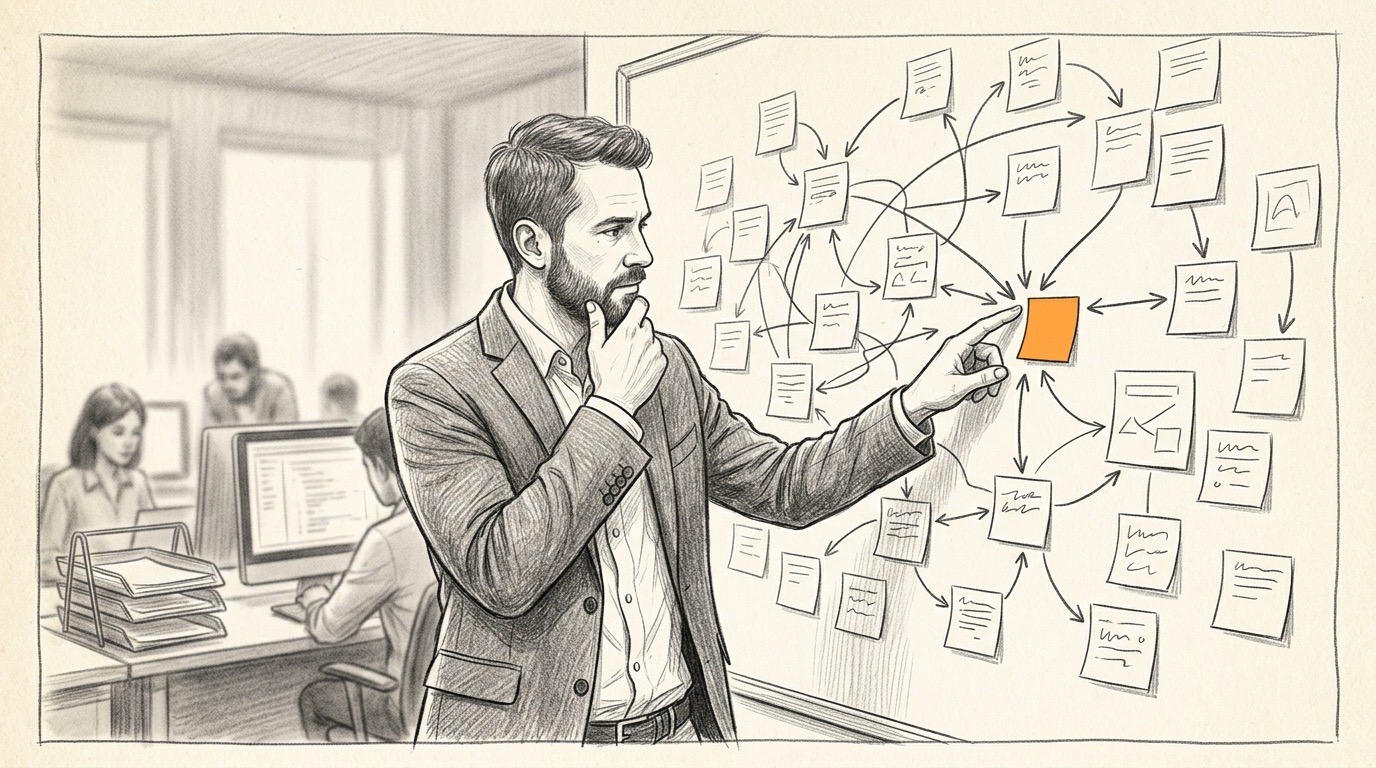
Revuity Systems came from something I kept seeing over and over again throughout my career.
I've worked inside all kinds of organizations, from smaller companies and startups to large enterprises and Fortune 500 companies. They were different in size, industry, budget, and complexity, but they almost always had one thing in common: somewhere, the work was broken.
The larger and better-funded organizations could usually live with broken work longer. They had enough people, money, and margin to absorb inefficient processes, disconnected systems, unnecessary manual work, and bad decisions.
But the cost was still there.
They were paying for broken work in time, labor, lost revenue, unnecessary spending, risk, or missed opportunities. They just had enough resources to carry it.
Smaller organizations didn't have that luxury. And in a tighter economy, fewer companies do.
I was always the person asking, "Why are we doing it this way?"
If we changed this process, how much time would we save? If we connected these systems, what would that eliminate? If we stopped spending money here, where could we invest it instead? If this is the real reason customers are leaving, why are we solving something else?
That way of thinking sometimes made me an uncomfortable employee.
I started realizing that organizations don't always reward people for questioning how the whole business works. Most people are hired to manage a specific function, hit their goals, and keep their part of the operation moving. Rethinking the system around them isn't always part of the job.
I never thought that way.
If a business was paying me, I felt invested in the business. I wanted the whole thing to work.
I remember working in finance at a film school and seeing a problem that, to me, went beyond finance.
We were losing students, and I believed a major constraint wasn't simply tuition. Housing and the cost of physically attending school were making enrollment harder.
I approached the president with an idea: build an online education option so students who couldn't afford the full cost of relocating and living near the school could still enroll.
The answer was no.
The school later closed.
I don't tell that story because I believe one idea would necessarily have saved an entire institution. Businesses fail for complicated reasons. What stayed with me was something different: I could see an operational problem, connect it to the economics of the business, imagine a different system, and I was prepared to build it.
And that pattern followed me throughout my career.
It also explains why my career has always been difficult to put into one box.
I went into data science because data was one of the best places to find problems and understand what was actually happening.
I learned to build software because sometimes identifying the problem wasn't enough. Someone had to build the solution.
I worked on organizational systems because technology alone doesn't fix a broken operation.
For a long time, that breadth could look like an enigma.
Eventually I realized the breadth was the point.
The problem doesn't care what department it belongs to.
Finance can be broken. Sales can be broken. Product can be broken. Revenue can be broken. Compliance can be broken. A workflow between three departments can be broken.
Sometimes the solution is software. Sometimes it's data. Sometimes it's automation or AI. Sometimes the operating model itself needs to change.
So I built Revuity Systems around the way I had already learned to work.
Study the business. Find where the work is breaking. Understand why. Design what should exist instead. Build it. Deploy it. Stay accountable for whether it actually works.
That is what a Revuity Forward Deployed Engineer does.
And that is ultimately why Revuity Systems exists.
What do we mean by "work"?
Every business has work that has to happen.
Finance is work. Sales is work. Operations is work. Product is work. Compliance is work. Customer service is work.
Underneath all of that work are processes, people, information, decisions, software, data, rules, handoffs, and controls.
Together, those things form the operational system that makes the work happen.
When that system works, the business runs.
When it doesn't, you start seeing the symptoms.
Someone has to manually move information between systems. A spreadsheet becomes critical infrastructure. A process only works because one employee knows all the exceptions. Sales and operations have different information. Managers can't see what is happening without asking five people. A company buys another tool, but somehow everyone ends up with more work.
Those are the kinds of problems Revuity Systems works on.
We study how the business actually operates, diagnose what is getting in the way, design what should exist instead, build and deploy it, and then advise on or manage the system when that makes sense.
In simple terms: study, diagnose, design, build, deploy, advise, manage.
The technology comes after we understand the work.
What does a Revuity FDE do?

Our primary delivery discipline is Forward Deployed Engineering, or FDE.
But FDE by itself is a broad category. A forward deployed engineer can be deployed against a lot of different problems.
At Revuity Systems, our specialization is operational systems. You could think of us as Operational Systems FDEs.
A Revuity FDE gets close enough to the operation to understand what is actually happening, not just what a requirements document says is happening.
We look at how work moves. Where it waits. Where information gets lost. Who makes decisions. What people are doing manually. Which systems talk to each other and which don't. Where risk is being created. Where capacity is being wasted.
Then we determine what needs to change.
Sometimes the answer is software. Sometimes it is automation or AI. Sometimes it is better data infrastructure. Sometimes the workflow itself needs to be redesigned. Usually, it is some combination of people, process, data, decisions, and technology.
That distinction matters. We don't start with the technology. We start with the work.
What value does that create?
A company doesn't really benefit because it has more software.
It benefits when something about the business works better.
A process that took days takes hours. People stop entering the same information three times. A manager can finally see what is happening. Customers stop falling through handoffs. Compliance becomes part of the system instead of something everyone scrambles to prove later. A team can handle more work without adding the same amount of overhead. A business can grow without its internal operation becoming progressively harder to manage.
That is the outcome we're after.
Software, AI, automation, data, and architecture are tools we can use to get there. The product is a better-working business.
Why Revuity Systems is different
There are consultants who will diagnose a problem and recommend what should change.
There are engineering firms that will build what you tell them to build.
Revuity Systems connects those two responsibilities.
We understand the operation deeply enough to determine what should change, then we have the technical capability to build and deploy the system that changes it.
That could mean improving finance, sales, operations, product, compliance, customer service, or something that cuts across all of them.
The function can change. The technology can change. The job stays the same: make the work work.
That is the value of a Revuity FDE — someone who can understand the business, identify the system underneath the problem, determine what should change, and help carry that change all the way into production.
Small, medium, or large, that is the opportunity Revuity Systems is built to provide.
If there is an important part of your business that technically works, but you know it should work better, that's usually a good place for us to start.
Revuity Systems. We make work work.
Frequently asked questions
- What does Revuity Systems do?
- Revuity Systems studies how a business actually operates, diagnoses what is getting in the way, designs what should exist instead, builds and deploys it, and then advises on or manages the system when that makes sense. In short: study, diagnose, design, build, deploy, advise, manage. Software, AI, and automation are tools used to get there, not the starting point.
- What is a Revuity Forward Deployed Engineer (FDE)?
- A Revuity FDE is a specialist in operational systems who gets close enough to a business to understand what is actually happening, not just what a requirements document describes. They determine what needs to change, whether that is software, automation, AI, data infrastructure, or a redesigned workflow, and carry that change through to production.
- How is Revuity Systems different from a consultant or a software firm?
- Consultants typically diagnose a problem and recommend what should change. Engineering firms typically build what they are told to build. Revuity Systems connects both responsibilities: understanding the operation deeply enough to determine what should change, and having the technical capability to build and deploy the system that changes it.